
In the competitive realm of wide format printing, the printhead serves as the critical nexus between digital design and physical output. For high performance machines like the Roland XF 640, the printhead is engineered to handle advanced weak solvent inks while maintaining exceptional color consistency across large banners, vehicle wraps, and outdoor signage. Understanding the operational dynamics, maintenance requirements, and replacement protocols of this component is essential for print service providers aiming to maximize uptime and preserve premium image quality.
Advanced Nozzle Architecture and Ink Compatibility
The Roland XF 640 printhead is specifically designed to support high density, richly saturated colors through an advanced droplet ejection mechanism. Its architecture works in tandem with specialized eco solvent formulations that dry rapidly upon contact with media. This synergy requires the internal channels and nozzle plate to remain impeccably clean to prevent ink viscosity changes from causing misfires or uneven banding. The precision manufacturing of these components ensures that micro nozzles can fire at varying frequencies without clogging, even during extended production runs involving heavy ink coverage.
Proactive Maintenance Protocols
Longevity in wide format printing is directly tied to disciplined preventative care. Operators must adhere to strict daily maintenance routines, including automated head cleaning cycles and manual wiping of the nozzle surface using approved lint free materials and flushing solutions. Regular inspection of the wiper blade condition and cap top seal integrity is equally vital; a compromised capping station will fail to create an airtight vacuum when the printer is idle, leading to dried ink accumulation and permanent nozzle damage. By maintaining optimal environmental conditions and executing scheduled purge routines, facilities can significantly extend the functional lifespan of the XF 640 printhead.
Diagnostic Evaluation Before Replacement
When print quality degrades, it is crucial to perform systematic diagnostics before concluding that the printhead has reached end of life. Missing nozzles, directional banding, or color shifts can often be traced to secondary issues such as depleted dampers, contaminated ink lines, or degraded encoder strip readings. Technicians should execute comprehensive nozzle check patterns, run bidirectional alignment calibrations, and verify electrical connectivity through resistance testing. Only after exhausting all remediation steps should hardware replacement be considered, ensuring that capital is allocated appropriately.
Precision Installation and Post Replacement Calibration
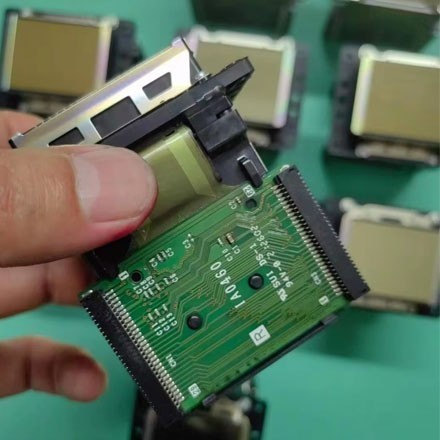
Replacing a Roland XF 640 printhead demands meticulous attention to mechanical alignment and system initialization. During installation, the new unit must be seated flush against the carriage manifold to establish proper ink flow and prevent air ingress. Following physical installation, the printer’s firmware must recognize the new hardware and initiate the ink charging sequence. Subsequent calibration procedures including step adjustments, color profiling, and voltage tuning are mandatory to synchronize the fresh nozzles with existing carriage mechanics. These post installation protocols ensure that the replacement component immediately delivers the crisp dot placement and vibrant color gamut expected from this professional grade platform.
Contact:Jason
Phone:+86 13764703359
E-mail:jason86ni@gmail.com
Add:No. 80, Building 10, Jiangdong Street, Yiwu City, Zhejiang Province

 Español
 русский
 Português
 Deutsch