
In the demanding realm of large-format commercial printing, the Epson 9890 print head is celebrated for its exceptional precision and gallery-grade output. However, maintaining this level of performance requires a holistic approach to printer maintenance that extends far beyond standard automated cleaning cycles. Industry veterans and print facility managers emphasize that the longevity and reliability of this advanced piezoelectric print head are deeply intertwined with environmental control and proactive fluid management.
The Critical Role of Ambient Humidity Control
One of the most effective, yet frequently overlooked, strategies for preserving an Epson 9890 print head is the meticulous regulation of ambient humidity. Print heads are highly susceptible to micro-clogs when the surrounding air is too dry, as moisture rapidly evaporates from the microscopic nozzles. Industry data suggests that increasing the humidity levels in the immediate vicinity of the printer can reduce print head clogging issues by up to 90%. For facilities operating in arid climates or during winter months, integrating a dedicated humidifier directly next to the equipment is considered a long-term cure for persistent nozzle dropouts, ensuring consistent ink flow and reducing the need for aggressive cleaning cycles.
Optimizing Fluidics Through Cartridge Management
The fluidic pressure within the ink delivery system plays a pivotal role in the health of the Epson 9890 print head. Experienced technicians note that what often appears to be a severe nozzle clog is frequently a system pressurization issue. When an ink cartridge runs extremely low, the system can draw in microscopic air bubbles or struggle to maintain optimal pressure, leading to missing nozzles. Strategically replacing a nearly empty cartridge with a fresh one before it is completely depleted helps re-prime the ink lines and restores proper fluidic pressure. Furthermore, utilizing fresh ink prevents the degradation of old ink, which can otherwise contribute to internal clogging and compromised print quality.
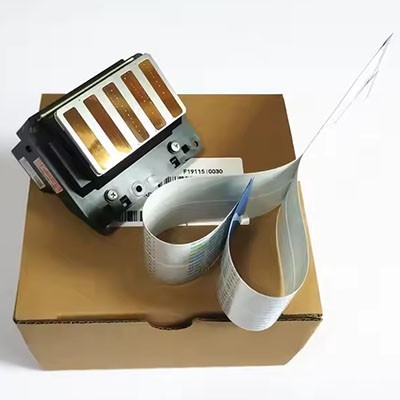
Strategic Maintenance and Wiper Assembly Care
While automated cleaning is essential, mechanical maintenance of the print head's resting environment is equally vital. The wiper blade and capping station are the first line of defense against dried ink and debris. Best practices dictate that the wiper should be manually cleaned on a monthly basis and replaced entirely on an annual cycle. This inexpensive and straightforward maintenance task ensures that the print head is perfectly sealed and cleaned during its idle state. Additionally, leveraging the printer's automated nozzle compensation technology can significantly reduce manual intervention, automatically adjusting for minor nozzle dropouts and keeping the Epson 9890 print head operating at peak efficiency for extended production runs.
Contact:Jason
Phone:+86 13764703359
E-mail:jason86ni@gmail.com
Add:No. 80, Building 10, Jiangdong Street, Yiwu City, Zhejiang Province

 Español
 русский
 Português
 Deutsch