
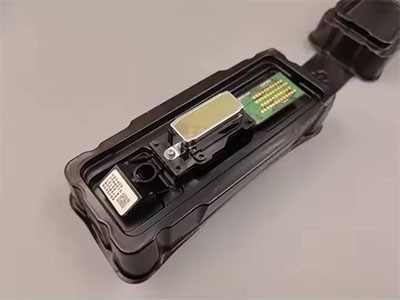
In the rapidly evolving world of wide-format digital printing, certain technologies leave an indelible mark on the industry. Despite the continuous introduction of next generation components, the specifications of the DX4 printhead remain a benchmark for reliability and versatility. For print service providers and equipment manufacturers alike, understanding the core architecture of this component is essential to appreciating the foundation of modern solvent and UV printing.
The Core Architecture: Precision and Density
At the heart of the DX4's enduring popularity lies its robust nozzle configuration. The specifications feature a dense array of 180 nozzles per color, arranged in two staggered columns. This dual column design was a significant engineering feat, allowing for higher print resolution and faster pass rates compared to its single column predecessors.
With a native drop size capability reaching as fine as 3.5 picoliters, this printhead technology bridged the gap between industrial durability and photorealistic quality. This level of precision enabled printers to produce sharp text and smooth gradients, making it a favorite for high quality signage and graphic applications where detail is paramount.
Unmatched Ink Versatility
Perhaps the most defining characteristic found in the Epson DX4 printhead specifications is its remarkable chemical compatibility. Unlike many modern printheads that are engineered for a single, specific ink type, this component was designed with a versatile internal architecture. It demonstrated exceptional performance across a broad spectrum of ink chemistries, including:
Eco Solvent Inks: Delivering vibrant, odorless prints ideal for indoor retail graphics and vehicle wraps.
UV Curable Inks: Allowing for instant curing and printing on rigid or heat-sensitive substrates.
Aqueous (Water based) Inks: Providing high-definition output for photo-quality posters and backlit displays.
This adaptability meant that machinery built around these specifications could serve a diverse range of market segments without requiring a complete hardware overhaul, offering tremendous flexibility to print shop owners.
A Standard for Industrial Integration
The physical and electronic specifications of the DX4 were standardized to ensure seamless integration into various wide format printing platforms. Its design accommodated the rigorous demands of roll to roll printing, maintaining consistent droplet placement even at high carriage speeds.
Furthermore, its compatibility extended across multiple generations of printing systems, supporting both legacy equipment and serving as a reliable upgrade path for machines transitioning into UV and eco solvent markets. This broad interoperability cemented its status as a workhorse component in the global printing supply chain.
The Legacy in Modern Printing
While the printing industry continues to push the boundaries of speed and resolution with newer technologies, the fundamental specifications established by the DX4 continue to influence printhead design today. Its balance of nozzle density, drop size accuracy, and multi ink compatibility set a high bar for industrial print components.
For businesses maintaining extensive fleets of wide format printers or those looking to understand the evolution of digital printing hardware, the DX4 remains a critical reference point. Its specifications represent a golden era of versatile, high quality industrial printing that continues to power countless production environments around the world.
Contact:Jason
Phone:+86 13764703359
E-mail:jason86ni@gmail.com
Add:No. 80, Building 10, Jiangdong Street, Yiwu City, Zhejiang Province

 Español
 русский
 Português
 Deutsch